
Tremolo
Tremolo is used to modulate the amplitude of the sound and is often used to give a rhythmic quality to a part.
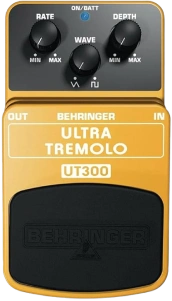
Tremolo is an audio effect that modulates the volume of a sound over time, creating a rhythmic "shimming" or "pulsing" effect.
Unlike vibrato (which alters pitch), tremolo affects the amplitude (volume) of an audio signal, causing it to swell and fade in a periodic rhythm. This effect adds texture and motion to both melodic and percussive elements across a mix.
Tremolo is widely used in rock, electronic, and film music production for its unique ability to inject emotional depth, tension, and organic rhythmic movement.
How Tremolo Works
Tremolo is created by modulating a sound's volume using a Low-Frequency Oscillator (LFO). The LFO controls the rate and depth of the volume fluctuation, producing a smooth, repeating rise and fall in loudness.
The main parameters involved in shaping tremolo are:
- Rate: Controls the speed of the volume oscillation. A slow rate yields a subtle, swaying pulse, while a fast rate creates a pronounced, stuttering tremolo effect.
- Depth: Defines the intensity of the volume modulation. Higher depth settings cause dramatic, complete volume drops, while lower settings result in a softer, more subtle pulse.
Applications of Tremolo
Tremolo is used creatively across many instruments and production styles:
- Electric Guitar: A classic vintage effect associated with surf rock and classic rock, adding character and rhythmic pulse to rhythm or lead lines.
- Vocals: Applying tremolo to vocals can create a haunting, nostalgic, or ethereal atmosphere, introducing movement into a sustained performance.
- Synthesizers and Pads: Adds dynamic texture to synth patches and ambient pads, keeping static layers moving in time with the track.
- Percussion: Introduced on auxiliary percussion or cymbals to build rhythmic intensity and a sense of dynamic motion.
How to Use Tremolo in Production
Tremolo plugins and stock LFO volume effects are available in most DAWs.
Producers can apply tremolo subtly to add life and motion to a track, or use aggressive settings for a pulsing rhythmic effect. Syncing the LFO rate directly to your project tempo ensures the pulse locks tightly into the groove of the song.