
Limiter
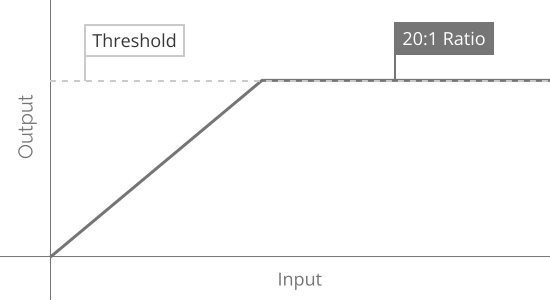
A limiter is a type of compressor with a high ratio, typically 20:1 or more, used to prevent audio signals from exceeding a set level. Learn how limiters enhance audio by controlling peak levels for cleaner, distortion-free sound.

Limiter Applications
A limiter is essentially a compressor with a very high ratio (typically 10:1 or greater, up to infinity-to-1). It has two primary applications in audio engineering:
- Preventing Distortion: Safeguarding digital converters or broadcast systems by strictly keeping signal peaks below a designated ceiling.
- Preserving Average Signal Amplitude: Reining in extreme transient peaks that would otherwise force you to lower the overall volume, allowing the track to achieve a higher perceived loudness.
Hard Limiting: A technique where the threshold is set aggressively to affect the entire upper portion of the signal, producing a dense, punchy, or "squashed" sound. This effect is a stylistic staple in certain rock, electronic, and modern pop production genres.
Working Example: Limiting on Percussion
1. Original Percussion Beat Without a Limiter:

2. Percussion Beat With a Limiter Added:

While limiters are crucial for final mastering ceilings and peak control, over-limiting individual mix elements can destroy dynamic life and introduce harsh digital artifacts. Use ceiling and release settings carefully!